Tehran, Beijing set sights on strategic economic partnership beyond trade
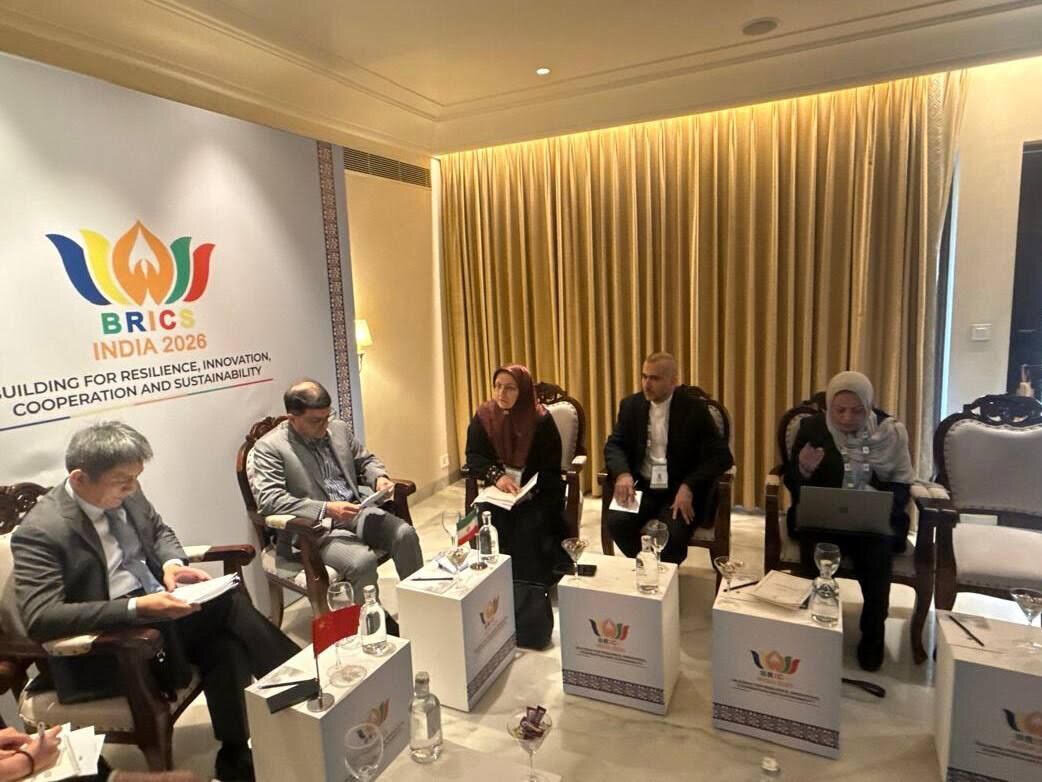
TEHRAN- Iran’s Deputy Minister of Industry, Mining and Trade emphasized the necessity of elevating Iran-China economic relations in line with the extensive existing capacities and said: Development of trade, industrial, investment, logistics, and exhibition cooperation is among the most important joint priorities of Tehran and Beijing.
According to IRNA reported on Thursday from the Ministry of Industry, Mining and Trade, Mohammad Sadegh Mofatteh, in a meeting this with Li Chenggang, China's international trade representative (with full ministerial rank) and Deputy Minister of Commerce, while referring to the growing trend of Iran-China economic relations, stated: Iran is ready, by utilizing mutual capacities, to elevate bilateral cooperation from the level of trade exchanges to strategic partnerships, joint investment, and development of value chains.
He identified the revision and signing of the 1991 Iran-China commercial agreement as one of the most important axes of the talks and said: The revised text of this document has been finalized after several rounds of expert negotiations and the formation of specialized committees in both countries, and is ready for signing.
The Deputy Minister of Industry, Mining and Trade emphasized setting an appropriate time for signing this agreement and beginning the implementation of the mechanisms foreseen within it.
Mofatteh also raised Iran's proposal for examining the "Comprehensive Tripartite Cooperation Plan of Iran, China, and Pakistan" and added: This proposal has been presented with the aim of utilizing the complementary capacities of the three countries in the fields of trade, transport, logistics, investment, and financial cooperation, and at the current stage is merely put forward as a preliminary framework for joint examination.
The Deputy Minister of Industry, Mining and Trade identified the stable supply of essential goods, raw materials, machinery, equipment, and parts needed by domestic industries as another important axis of the talks, and called for the introduction of reliable Chinese suppliers, conclusion of long-term contracts, establishment of supply mechanisms in emergency situations, use of alternative financial methods, and guarantee of quality and after-sales services.
Emphasizing the necessity of developing industrial cooperation between the two countries, he stated: Iran-China economic relations should be directed more than ever towards joint investment, joint production, technology transfer, and implementation of industrial projects in sectors such as mining, mineral industries, petrochemicals, automotive, industrial machinery, renewable energies, electrical equipment, batteries, pharmaceuticals, and knowledge-based industries.
Mofatteh also described the activation of the Iran-China railway corridor as a strategic move in the development of bilateral trade and said: Launching scheduled trains, granting preferential tariffs, developing cooperation in logistics hubs, dry ports, container terminals, and examining complementary routes through Central Asia and Afghanistan can, while reducing cost and time of cargo transport, strengthen the security of the supply chain and Iran's transit position.
In another part of this meeting, the Deputy Minister of Industry, Mining and Trade identified the development of exhibition cooperation as one of the effective tools in increasing economic interactions between the two countries and proposed that Iran participate as the "Honorary Guest" in the China International Import Expo (CIIE 2026).
MA
Leave a Comment